
Every time you visit, you will be inspired.
The Asahi Group Oyamazaki Villa Museum of Art is a place where you can make new discoveries every time you visit. In this section of the website, we will introduce all the charms of the museum, where the attractive architecture, works and garden resonate with one another.
30th Anniversary Video
History
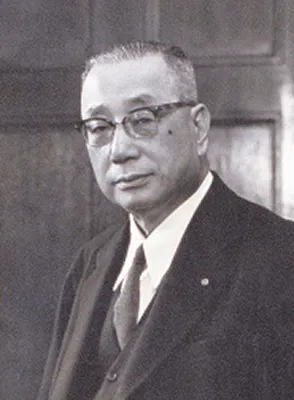
Oyamazaki-sanso (Oyamazaki Villa) was built during the Taisho and Showa eras as a country villa for Shotarao Kaga, a wealthy businessman from the Kansai region. Kaga cultivated orchids and published a series of botanical woodblock prints of orchids, “Rankafu” while doing business. He also helped found Nikka Whisky Distilling and in his later years gave his Nikka shares to Tamesaburo Yamamoto, his close friend and the first president of Asahi Breweries (presently Asahi Group Holdings), entrusting the future of the company to Yamamoto. This relationship between the two men eventually led to the establishment of the museum. After the death of Shotaro Kaga and his wife, the villa was relinquished by the Kaga family. Subsequently, a plan to demolish it to build a condominium was developed, but local people who were against this plan voluntarily led a campaign to preserve the villa. In response, Asahi Breweries cooperated with Kyoto Prefecture and Oyamazaki Town to preserve and restore the villa to open it as museum.

Courtesy of Takayuki Kaga
Architecture
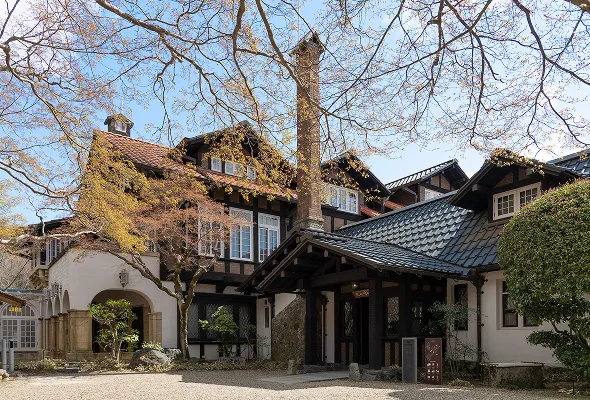
Shotaro Kaga designed and oversaw the construction of the villa, which is now used as the main building of the museum. Inspired by the sceneries and buildings that he had seen during his visit to the United Kingdom, he started to construct the villa in 1912. It became what it is today in 1932. The building was designed based on the British style, but the second-floor part, which was built after the occurrence of the Great Kanto Earthquake (1923), is made of reinforced concrete. The museum was opened by adding the Underground Jewelry Box annex designed by Architect Tadao Ando to the main building. The annex is semi-buried underground to be in harmony with nature, in which Water-Lilies of Claude Monet are on permanent exhibition. Further, in 2012, the Dream Box annex (“Yamatekan”) was newly built at the former greenhouse site as beautiful architecture that integrates with nature.

Garden
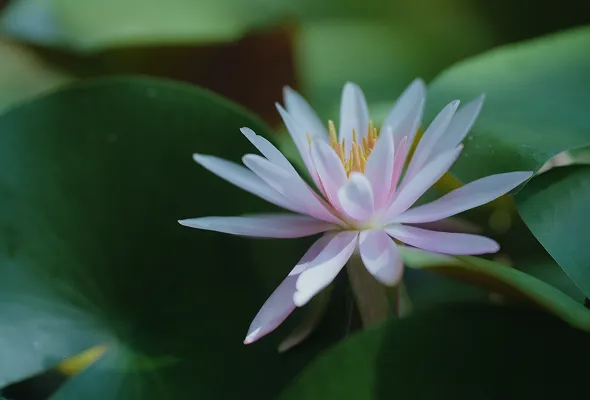
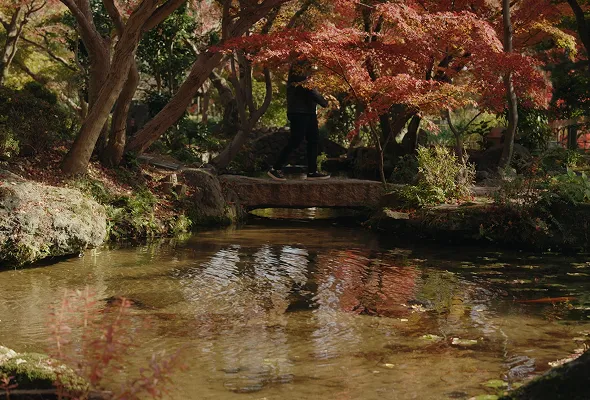
The garden extends over about 18,000 square meters, where you can enjoy seasonal nature. In spring, cherry trees bloom one after another. In early summer, water lilies bloom on the pond in resonance with Claude Monet’s Water-Lilies. In fall, you can view the beautifully colored leaves of maple and ginkgo trees, and in winter, camellia and nandina trees add colors to the calm landscape. Every time you visit the garden, which shows different expressions each season, you will make new discoveries and encounter something new.
Location
The museum is located in Oyamazaki, which is a nature-rich town situated on the border between Kyoto and Osaka. Three rivers named Katsuragawa, Ujigawa and Kizugawa merge in the area, blessing the town with water and greenery. It has long been a famous sightseeing place. When you stand on the terrace of the villa located at the southern foot of Mt. Tennozan, you can enjoy a panoramic view of Mt. Otokoyama across the rivers, and of the mountains connecting the southern part of Kyoto to Nara in the distance.

Collections
In addition to several works from maestro impressionist Claude Monet’s series of Water-Lilies, you can also view artistic works that have a connection with the Mingei (folk craft) Movement, which Tamesaburo Yamato earnestly supported. In the following we will introduce some of the works in the possession of the museum.
-
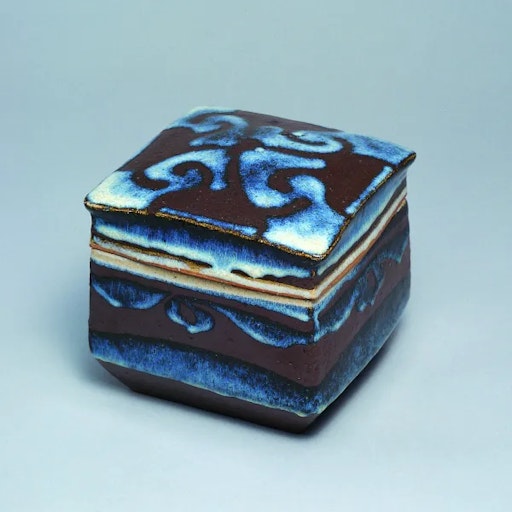
Box
Around 1943
Length 14.8 × Width 14.8 × Height 14.5 cm
Kawai often created lidded objects, for which advanced skills were needed. This box is one of his works with lids. It has sharp edges, while the top of the lid is gently rounded. It has a strong presence. The namako (literally, “sea cucumber”) glaze is overlaid on the brown iron glaze giving the box a mystical and profound look. It is worthy of his reputation as a “wizard of glazes.”
Schedule:March 20 - September 6, 2026
-
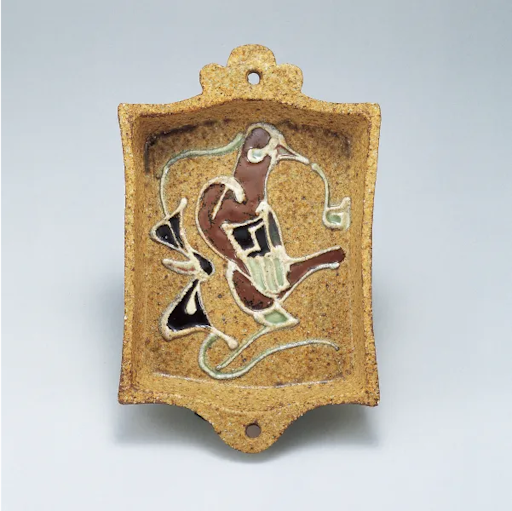
Rectangular Dish
Around 1952
Length 28.5 × Width 18.3 × Height 4.0 cm
Slip trailing is a technique used to draw a pattern on a clay object by applying liquid clay from a tube-shaped dispenser made of washi and other materials onto the surface of the object. It is called “Tsutsugaki” or “Itchin(g)” in Japanese. The lines and bold patterns created through this technique by Kawai testify to his unwavering commitment. The Bird Eating Flower motif depicted on this unique plate designed by himself often appears on handicrafts made in the Nara era, such as those included in the Shoso-in Treasures. This fact implies that Kawai was eager to learn from classics.
Schedule:March 20 - September 6, 2026
-
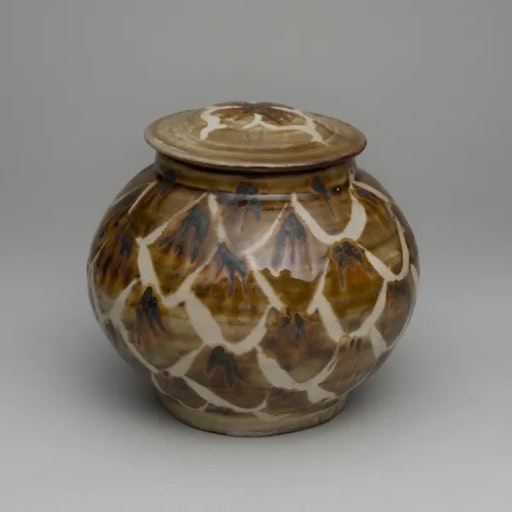
Lidded Jar
Around 1927
Maximum diameter 16.4 × Height 15.0 cm
The rounded sides of the jar are covered with a netlike pattern. In the wax resist technique, a design is created on the surface of a clay object by using a brush to which wax is applied, then the entire surface is covered with glaze. The object is subsequently fired in a kiln, and after the wax is melt by the heat, the parts to which the glaze did not stick being repelled by the wax will appear as a pattern. Hamada created this work in the first half of his 30s, when he visited the Tsuboya kiln in Okinawa.
Schedule:March 20 - September 6, 2026
-
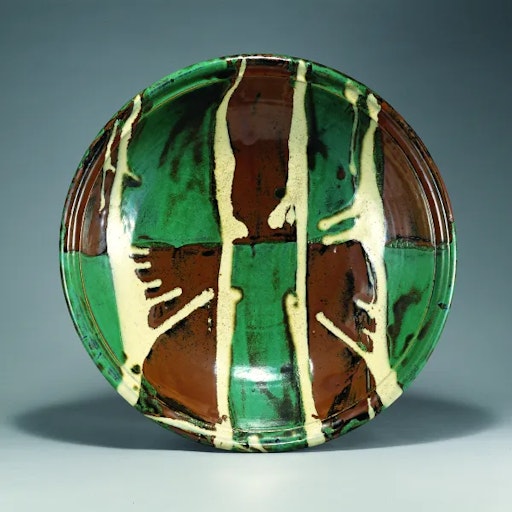
Large Bowl
1960s - 1970s
Maximum diameter 55.0 × Height 14.7 cm
Hamada, in his later years, proactively created large bowls that were stately and had recessed rims. This work was created by boldly pouring white glaze and combining green and iron glazes to form a checkered pattern. The advanced skill used to instantly create a dynamic pattern by pouring glaze from a ladle can be acquired only through long years of experience. Hamada created this plate during his period of maturity as an artist.
Schedule:March 20 - September 6, 2026
-
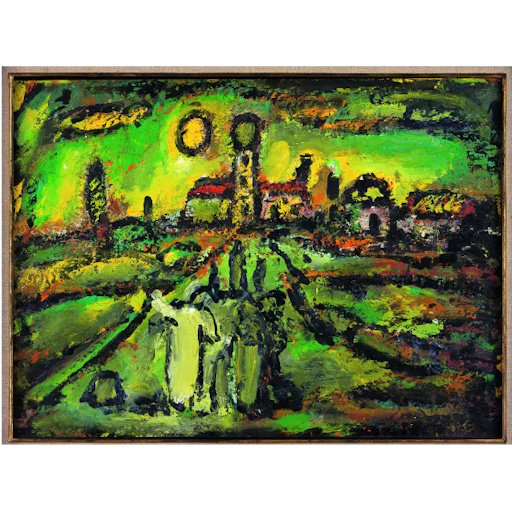
Biblical Landscape
1956
Length 47.5 × Width 64.0 cm
The work depicts Christ in a white robe talking to people in bright sunlight against a pastoral landscape with a church-like building in the center. Rouault, who pursued religious themes, attributed importance to landscape paintings especially in the latter half of his life. The vivid colors, neat composition, and layers of paints, which were applied like a spiritual exercise, make the painting one of his best works.
Schedule:September 19 - December 6, 2026
-
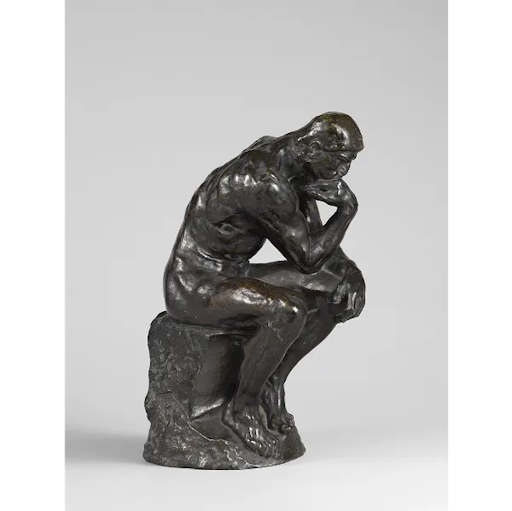
The Thinker
1880 (prototype)
Depth 31.0 × Width 20.0 × Height 36.5 cm
The sculpture depicts a thinker seated on a rock, leaning forward and resting his chin on his right hand. The man is muscular like an athlete but is thinking deeply with calmness. The Thinker is one of Rodin’s most famous works. Some believe that it was originally intended to depict Dante Alighieri, an Italian poet and philosopher of the 13th century. The Thinker was cast in three sizes, and this work is of the smallest size.
Schedule:December 19 - April 11, 2027
-
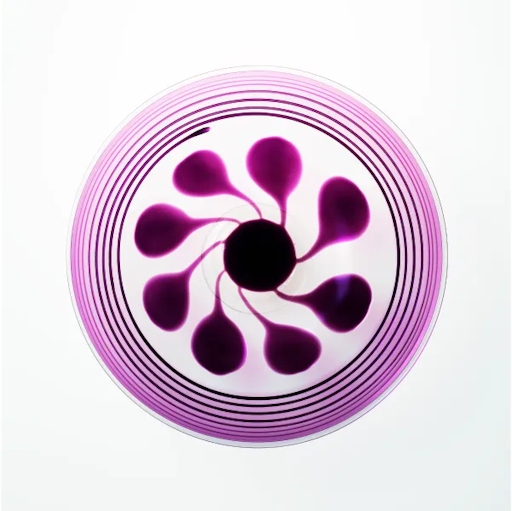
Large Dish
1988 - 2012
Maximum diameter 30.7 × Height 4.6 cm
Funaki drew a pattern on the surface of molten glass before glassblowing, which made the glassblowing very difficult. However, as demonstrated by this plate, the artist wonderfully handled, molten glass, which cools down and hardens very quickly. In the center of this plate, you can see a large leaf pattern, which is Funaki’s specialty along with the shades of colors on the lines drawn on the rim of the plate.
Schedule:September 19 - December 6, 2026
-
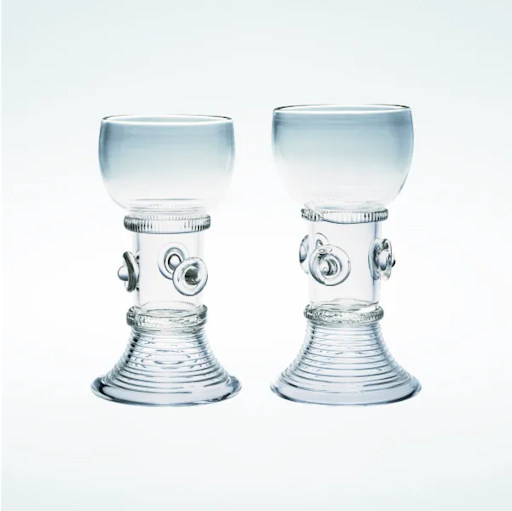
Roemer Cups
1988 - 2012
Maximum diameter 10.2 × Height 18.9 cm
Funaki created a range of drinking vessels, including wine glasses, decanters, and roemer cups for white wine, which originated in Germany. This cup has round protruding ornaments on the surface, which you may associate with imposing architecture, although the cup has a height of less than 20 cm.
Schedule:September 19 - December 6, 2026


